
What Douglas County Deed Records Reveal
The Clerk of Superior Court Real Estate Division keeps the county's land records. That office records and indexes every deed. It also scans and links each related instrument. Each deed names the parties and the land description behind a transfer. Some also add a prior deed reference, consideration language, transfer-tax details, reservations, or exceptions. The index only points you to the instrument. Read the full image before drawing any conclusion.
| Deed Type | What It Does | Common Use |
|---|---|---|
| Warranty deed | Conveys the described interest with stated title warranties | Ordinary arms-length conveyances |
| Quitclaim deed | Conveys whatever interest the grantor has without broad warranties | Family transfers and title cleanup |
| Security deed | Secures a debt against the real estate | Mortgage financing |
| Executor or trustee deed | Shows a fiduciary conveying under stated authority | Estate or trust administration |
| Tax deed | Records a conveyance arising from a tax sale | Delinquent-tax proceedings |
A security deed or lien encumbers land. It does not convey ordinary ownership. Releases and cancellations show whether a recorded burden was later cleared, which makes them just as important as the filing itself. Read Douglas County deed records as one connected trail rather than a single transfer.
Douglas County's Land-Record Custodian
The Real Estate Division works out of the Douglas County Courthouse at 8700 Hospital Drive in Douglasville. Weekday hours run from 8 a.m. to 5 p.m. The Superior Clerk answers questions at 770-920-7252, and the records room has its own line at 770-920-7441. Visiting in person still matters. A portal redirect may fail, an older volume may never have been imaged, and certified copies of a deed often require a trip to the courthouse.
On its 2024 page, the division reported filing more than 34,000 real-estate documents. The category table displayed there totals 30,047 instruments. That count breaks into 16,563 real-estate filings, 11,692 liens, 203 plats, and 1,589 UCC financing records. Treat the two figures as separate published facts. The county page never reconciles the difference between them.
Note: Ask the records room for a year, party name, instrument type, and book/page whenever possible to narrow a staff-assisted search.
Search Douglas County Deeds in GSCCCA
The GSCCCA Real Estate Index spans every Georgia county. Coverage is guaranteed from January 1, 1999, forward. Older records keep arriving over time. Douglas County searches can run on documented index keys, though address, map, PT-61, and some one-screen tools sit behind a premium tier. Pull a parcel PIN and legal description from QPublic to sharpen a basic party search.
| Search key | How to use it | Why it helps |
|---|---|---|
| Party name and type | Enter a person or entity and choose grantor or grantee | Separates a seller from a buyer |
| County and date | Limit results to Douglas and a transfer period | Controls common-name results |
| Instrument type | Choose deed, security deed, lien, release, or plat class | Focuses the document trail |
| Book and page | Enter a reference copied from another instrument | Retrieves a specific recording |
| Subdivision fields | Use unit, block, lot, or subdivision when indexed | Matches the legal description |
The GSCCCA book/page form walks the county, date, book, and page route. One exact reference often beats endless name variants.
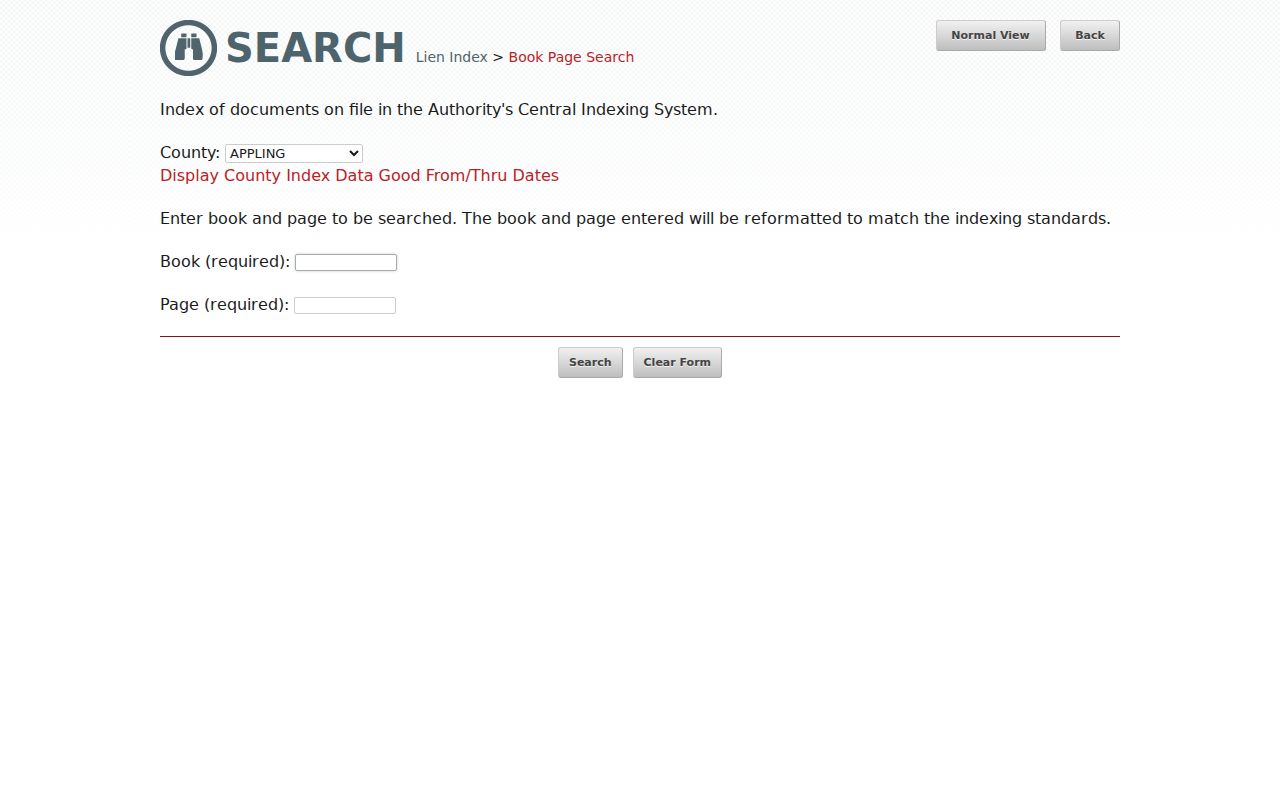
The form only retrieves. The instrument image and legal description still connect the result to a parcel. The wider GSCCCA search menu keeps real-estate, lien, plat, and related systems separated.
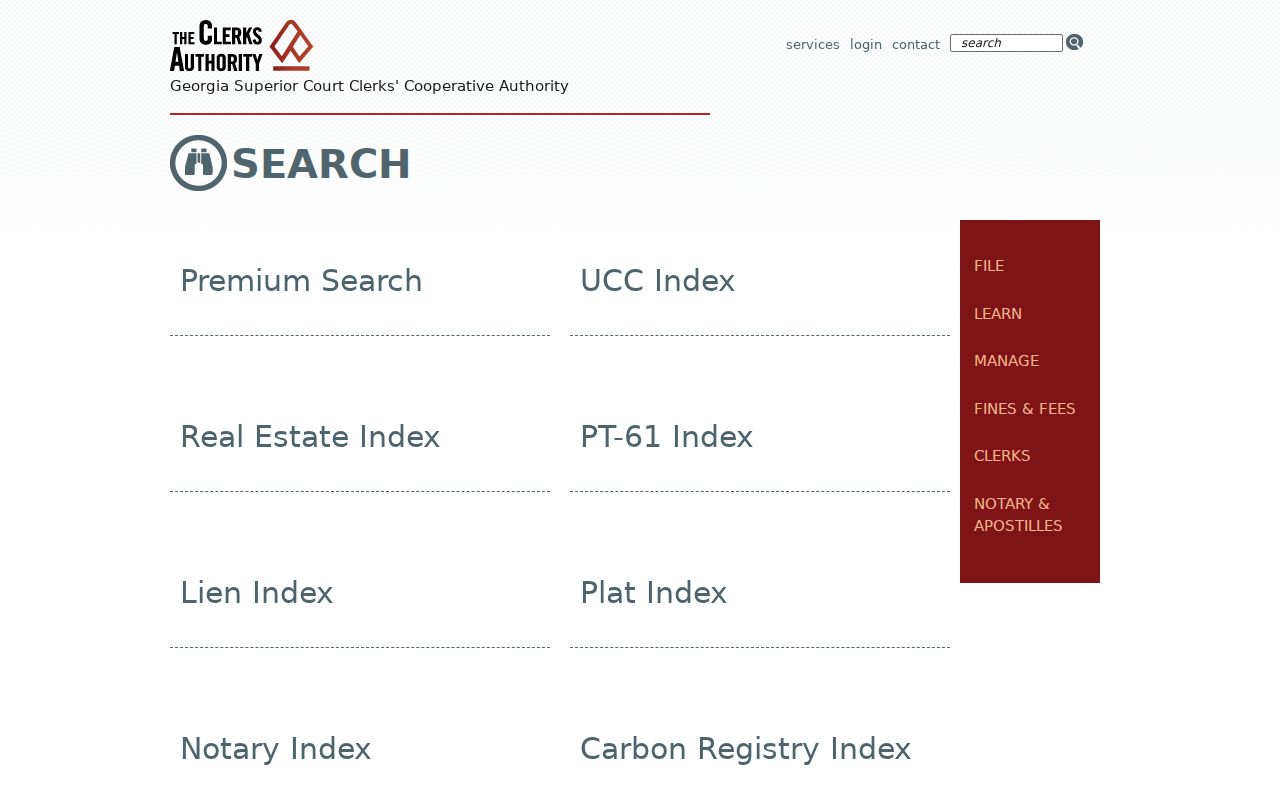
Match the system to the instrument. A deed search and a lien book-and-page search do not return interchangeable evidence.
Walk the Douglas County Grantor-Grantee Chain
Start from the newest known acquisition deed. Skip the broad surname hunt. Copy the current parcel PIN, legal description, and owner display from QPublic or GIS first. Then log every step. A worksheet should capture both dates, parties, deed type, book/page or instrument number, subdivision and lot, land lot and district, prior deed reference, and any exceptions or easements. That discipline keeps the title trail honest.
- Search the current owner as grantee and match the property description, date, and deed reference.
- Open the deed and transcribe the grantor, legal description, and cited prior instrument exactly.
- Search that grantor as a grantee in an earlier date range. Try spouse, trustee, estate, and entity-name variants.
- Repeat until reaching the desired period. When the online trail stops, take the last reliable book/page to the Clerk's older indexes.
- Grantor
- The party that conveyed the stated interest.
- Grantee
- The party that received the stated interest.
- Chain of title
- The ordered sequence of instruments tied to the same land.
- Book/page
- A volume-and-page citation used to retrieve an older recorded document.
- Instrument number
- A unique recording identifier used by the index.
From the 1999 Index Back to 1871 Custody
The statewide online baseline and county custody are different things. GSCCCA guarantees deed-index coverage only from 1999. The Clerk holds Douglas County records back to 1871. The county itself was formed in 1870. The county publishes no complete schedule of pre-1999 images, microfilm, or deed-book volumes. For an older chain, call the records room and request the grantor-grantee index and deed book for the known year. A nineteenth-century trail may detour through Campbell County, Campbellton, a land lot and district, or an old creek or road name. Douglas County was carved from predecessor territory. A dead end near formation often just marks a jurisdiction change. The deed may still exist, one county over.
Two depths matter. Online coverage is guaranteed from 1999, while local custody is described back to 1871. Confirm older volume and image access with the Clerk.
Douglas County Plats, Easements, and Parcel Splits
A recorded plat shows what a tax card only abbreviates. Lots, blocks, roads, and drainage appear on the sheet. Common areas, dedications, and easements do too. GSCCCA offers a plat docket. The Clerk holds the county's recorded plats. When a modern PIN is absent from an old deed, search by subdivision, phase, lot, land lot, and prior parcel description instead. Douglas County's split-and-combination process requires a survey, a Zoning Administrator review and stamp, recorded deeds, and an assessor/GIS update. That fork can leave an old PIN in earlier deeds and a new PIN on the current parcel map. Keep both identifiers plus the approval and recording dates. The Douglas County parcel map page explains the wider boundary context.
Note: A recorded plat supplies legal context, but only a surveyor can locate an exact boundary for construction or a fence.
The 2025 Douglas County E-Filing Change
A state law rewired how Douglas County records land documents. Under HB1292, self-filers must submit real-estate instruments for the deed records electronically through GSCCCA. That mandate takes effect starting January 1, 2025. Paper submission is no longer the default route. The county carves out exceptions for Georgia attorneys, mortgage lenders and servicers, title-insurance companies, surveyors, brokers and salespersons, credit unions, and public officials. What the rule changes is the submission route. Public access to a recorded filing stays the same. The Real Estate and UCC division page is the county's current source for the rule. It also carries the filing contacts. Anyone preparing to record a deed there should confirm current requirements rather than rely on older paper-filing habits.
FANS Watches for New Douglas Recording Activity
GSCCCA's free Filing Activity Notification System sends alerts when a new filing matches a registered name, address, document type, UCC, lien, plat, or PT-61 address record. The service is popular. GSCCCA reported about 85,000 users and roughly 385,000 matches through June 30, 2025. Those are statewide figures. They measure scale, not Douglas County activity alone. Remember that FANS only looks forward. It can flag a newly indexed event, but it cannot reconstruct earlier ownership or judge whether an instrument is valid. Treat each alert as a prompt to pull the deed records and call the Clerk about anything unfamiliar.
Obtain a Douglas County Deed Copy
The GSCCCA search gateway is the starting point for the index and available images. Its published account terms lay out premium access at $29.95 per user per calendar month with $0.50 per printed page. A cheaper option exists. A $5 limited-time account covers four consecutive hours plus print charges. Limited-use access searches and shows summaries without images. Read the terms before paying. Services and rates can change. When an image is missing, a redirect fails, or certification is needed, contact the Clerk's Real Estate Division or records room. The county's current open-records guidance allows the first quarter-hour of search time at no charge. After that come qualified-employee time, $0.10 per copied page, and actual certified, media, mailing, or other production costs. One caution applies. The Clerk's older deed-copy press release carries historic price language, so treat it as background rather than a current deed fee.
Recorded does not mean guaranteed. The Douglas County index shows what entered the public record. It is not a title opinion, and an index hit does not resolve every unrecorded or misindexed interest.
Ask for a plain copy for research, or a certified copy when official authentication matters. Supply the book/page or instrument number, plus names, recording date, and document type. Tracing a longer ownership history takes patience. The former owners guide shows how to step backward through the deed records without mistaking one same-name party for another.