
Identify a Douglas County Property Owner
The soundest method starts in Douglas County's official property systems and ends at the recorded instrument. Throughout the search, the parcel identity stays fixed while the owner name gets tested.
- Search the situs address in Douglas County QPublic or county GIS.
- Copy the PIN, OWNER display, mailing fields, and legal description.
- Search that owner as grantee in the GSCCCA Real Estate Search.
- Open the newest matching conveyance and compare its legal description or subdivision and lot.
- If the owner is an entity or estate, check the relevant business or probate record.
Three agreeing points make the strongest public-record answer: the assessor OWNER field, the newest deed grantee, and a matching PIN or legal description. All three must align.
Where Douglas County Ownership Is Shown
No single Douglas County office creates every part of an ownership answer. The tax roll gives a current tax-year name. The deed supplies the conveyance text. A plat or GIS map ties both records to reference geography.
| Where ownership is shown | What it gives | How current |
|---|---|---|
| Board of Tax Assessors / QPublic | OWNER, mailing address, situs, PIN, legal and value clues | Owner carried for the stated roll date |
| Clerk / GSCCCA deed index | Grantor, grantee, instrument, date, book/page, property text | Newest matching recorded conveyance |
| Douglas County GIS | Parcel polygon, PIN, owner field, tax district and jurisdiction context | Current service layer, subject to update timing |
| Georgia Secretary of State | Entity status, office, agent, and filing details | Based on the business filing record |
The roll and the map are efficient leads. For the transfer itself, the recorded deed is the better source, though even a deed index hit is not a title opinion.
Read Douglas County's OWNER Field Exactly
Douglas County's ArcGIS Parcel Address layer exposes a field named OWNER, with separate situs and mailing fields beside it. Copy the name exactly. Preserve the displayed punctuation, initials, trustee wording, corporate suffix, and estate terms. Small changes bring different name-search results.
Ownership terms
An owner of record is the name the official roll carries for its date. A grantee receives an interest under a deed. Title is the full legal set of rights, not just a name in an index. Situs is where the land sits. A mailing address is only where notices go.
Douglas County's returned-mail table reinforces this split by listing parcel address, owner as of January 1, and last known mailing address in distinct columns.
The county's QPublic entry page is the official first stop shown in the successful portal capture below.
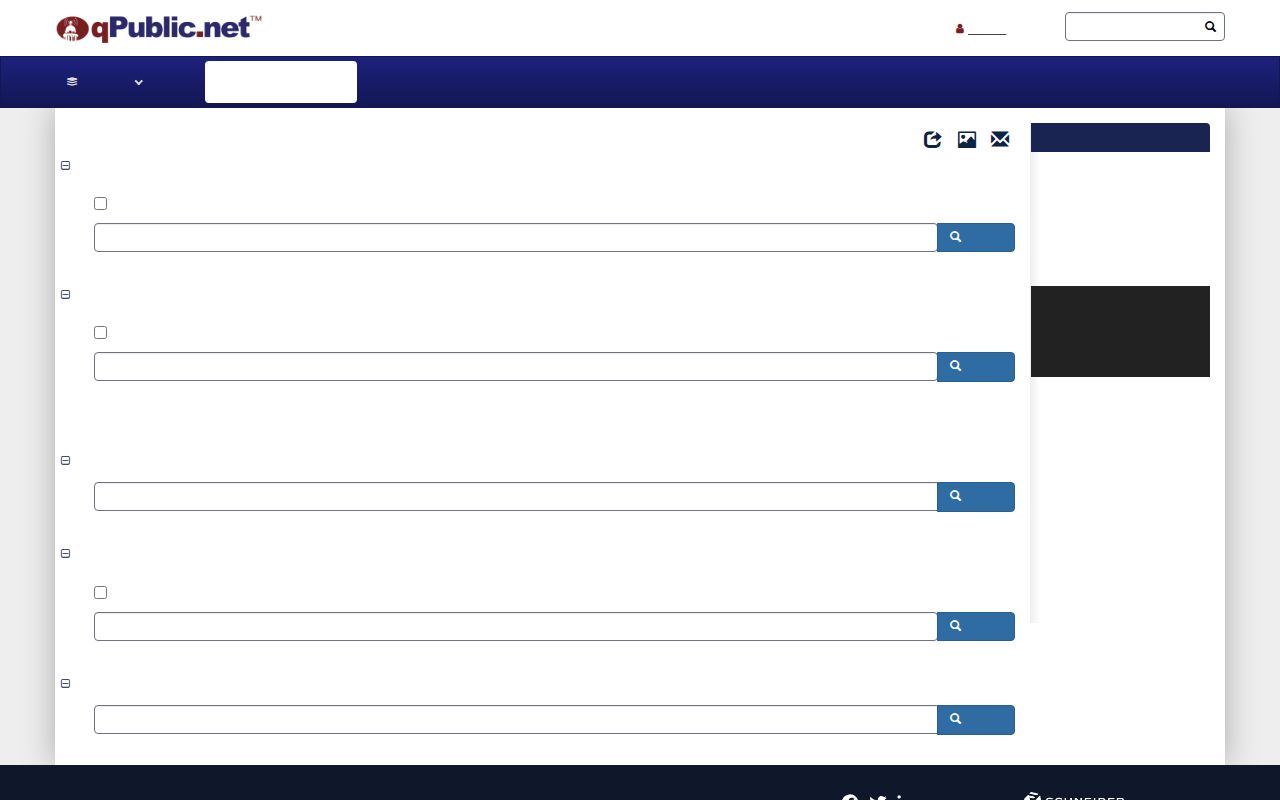
Work from that official entry to identify the owner field and the PIN. Keep the parcel view open. Then match it against the latest recorded deed for the same land. When the deed's legal description matches, the ownership picture firms up.
Why January 1 Changes the Douglas County Answer
The Tax Commissioner states that the office records the owner as of January 1. A sale later in the year may therefore produce a recent deed while the tax-roll owner still shows the earlier name. Douglas County publishes no exact standard lag interval, so a fixed promise such as "updated in thirty days" is unsupported.
When dates disagree, record the roll year, deed instrument date, and recording date. The newest deed may be more recent, but its land description must match the subject parcel before it is treated as the same property.
Note: A newer recorded deed can outrun the annual owner field, and Douglas County has not published one exact roll-refresh interval.
Trace a Douglas County LLC, Trust, or Estate
The named owner may be an entity. Search an LLC or corporation in the official Georgia business search, using both exact and contains-name options. Results can show entity status, principal or registered office, registered agent, and filed documents. Those facts identify the right entity. They do not transfer the parcel.
A trust may surface through the trustee's name. An estate may require Douglas County Probate Court records. Estate files reach back to the late 1800s, with name indexes and public access online or in person. Confirm any executor, administrator, or heir event with the deed or order that contains the parcel description.
Follow Douglas County Ownership Through Probate
A deceased person's name on the Douglas County tax roll does not reveal whether an estate case, year's support award, executor's deed, administrator's deed, or later heir conveyance has changed the record trail. The Douglas County estates and wills office keeps public estate records with name indexes reaching into the late 1800s. Search the decedent and the representative. Note the estate number and every land-related filing.
Probate establishes authority. It may explain a gap between the tax card and a deed. Tie it to the same property. A legal description, deed reference, PIN, or later recorded conveyance makes that link. If no online image answers the question, the Probate Court's in-person index remains open. The Clerk's real-estate records are the other documented fallback.
Confirm Who Owns With the Latest Douglas Deed
GSCCCA supports grantor and grantee, county, date, party type, and instrument type searches. Book and page, subdivision, unit, block, and lot searches are covered too. Every Georgia county has an online real-estate index. The baseline reaches back to at least January 1, 1999. Older historical data is added over time. Douglas County's Clerk holds land records back to 1871.
Search the apparent owner as grantee. Then compare the newest relevant deed with the tax card. The two should agree on the legal description. If the index lacks the address, use the legal description, subdivision, lot, land lot, or a prior book and page reference. You can also use a prior book and page reference. That reference trail usually cracks older deeds. For older records, assistance, and certified copies, the Clerk of Superior Court Real Estate Division at 8700 Hospital Drive, 770-920-7441, is the fallback.
Watch New Douglas County Record Activity
Once you know who owns a Douglas County property, free monitoring can take over from there. The GSCCCA Filing Activity Notification System watches for new filings on your behalf. Register a name, address, document type, lien, UCC, plat, or PT-61 address. It then flags matching activity in the deed records. GSCCCA reports about 85,000 users and roughly 385,000 matches through June 30, 2025. That reach makes it a useful companion to any Douglas County property search. Treat each alert as a starting point, though.
An alert is not an ownership ruling. Pull the filed instrument and match it to the parcel number before drawing conclusions. A suspicious filing in the deed records still deserves a lawyer's eye. Periodic checks of the deed index remain wise, too.
Resolve a Douglas County Owner No-Match
A blank or conflicting result rarely means the parcel lacks a recorded owner. Start small. Test the street suffix, the unit number, and the postal-city spelling. Then fall back to the PIN. Villa Rica and Austell both cross county lines. So confirm the land truly sits in Douglas County before trusting the tax roll. A split or combination can also strand an older deed under a former PIN.
On the deed side, strip punctuation. Try both the full entity name and a shortened variant. Search grantor and grantee roles across a practical date range. Remember the limit of online deed records: before 1999, the guaranteed statewide baseline ends. The Clerk's local books and records room hold the older route. Keep a short log of every address, PIN, roll name, deed party, and legal description you try. That way one near-match does not get mistaken for a different parcel.
Note: A no-match calls for a second search key and a jurisdiction check, not a guess about who owns the property.
Limits on a Douglas County Owner Lookup
A Douglas County ownership lookup shows what public offices recorded, and when. It cannot prove who occupies a building. It cannot resolve every unrecorded interest. It cannot vouch that an entity filing is current. It cannot settle competing claims. A tax sale list, a mailing address, a lien entry, or an old deed is one lead among many. So weigh each against the fuller property records before concluding who the owner of record is.
Ownership is not settled by one name. A roll entry is not a title search, and property information may be used only for lawful diligence, history, estate, boundary, and civic purposes, never to harass or target anyone.
For a deeper view of the present roll field, the Douglas County current owner guide covers the assessor and tax roll side. When prior owners matter, the former-owner page walks the backward deed-chain method through the deed records.